- 02 November 2026
- National
Central Government Constitutes National Social Security Board for Gig and Platform Workers
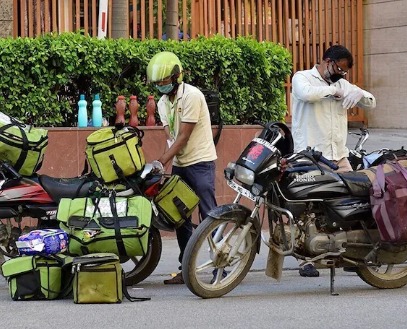
On October 30, 2026, the Ministry of Labour and Employment issued a notification for the formation of a National Social Security Board for unorganized, gig, and platform workers. This has been constituted under the provisions of the Code on Social Security, 2020. Its primary objective is to strengthen the social security framework for workers who operate outside the traditional employer-employee relationship. Definition of Gig and Platform Workers: According to the Code on Social Security, 2020,...
On October 30, 2026, the Ministry of Labour and Employment issued a notification for the formation of a National Social Security Board for unorganized, gig, and platform workers. This has been constituted under the provisions of the Code on Social Security, 2020. Its primary objective is to strengthen the social security framework for workers who operate outside the traditional employer-employee relationship. Definition of Gig and Platform Workers: According to the Code on Social Security, 2020, 'gig workers' are individuals who work outside the traditional employer-employee relationship and earn an income from such work—for example, independent service providers, freelancers, and those engaged in short-term tasks. 'Platform workers,' on the other hand, are individuals who earn an income by providing services to an organization or a customer through an online platform—for instance, online cab drivers, food delivery partners, and online service providers.
Board Structure and Membership: The National Social Security Board is chaired by the Union Minister for Labour and Employment. It includes representatives from the central and state governments, aggregators, employers, trade unions, civil society organizations, as well as gig and platform workers. Its objective is to foster coordination among various stakeholders to ensure that policies concerning the interests of workers are effective. Key Functions and Responsibilities of the Board: The Board is tasked with recommending appropriate social security schemes to the Central Government for various categories of unorganized, gig, and platform workers. Furthermore, it provides advice to the government on matters related to the administration of the Social Security Code, monitors the implementation of welfare schemes, and reviews records pertaining to social security measures—as well as expenditures incurred on such schemes—at the state level. Frequency of Meetings and Administrative Arrangements: The National Social Security Board is mandated to hold at least three meetings annually. These meetings serve to review the progress of social security schemes, deliberate on policy recommendations, oversee the implementation of schemes, and address issues related to worker welfare. Regular meetings help promote accountability and administrative coordination within the social security framework. Significance for the Indian Economy and Worker Welfare: With the expansion of the digital economy, e-commerce, and app-based services in India, the importance of gig and platform-based employment has grown. However, such workers often face challenges in accessing benefits—such as health insurance, maternity benefits, accident insurance, and old-age security—that are typically available in traditional employment. The establishment of the National Social Security Board represents a significant step toward bringing these workers under the ambit of social security, fostering inclusive growth, and ensuring social justice.
Read More
Board Structure and Membership: The National Social Security Board is chaired by the Union Minister for Labour and Employment. It includes representatives from the central and state governments, aggregators, employers, trade unions, civil society organizations, as well as gig and platform workers. Its objective is to foster coordination among various stakeholders to ensure that policies concerning the interests of workers are effective. Key Functions and Responsibilities of the Board: The Board is tasked with recommending appropriate social security schemes to the Central Government for various categories of unorganized, gig, and platform workers. Furthermore, it provides advice to the government on matters related to the administration of the Social Security Code, monitors the implementation of welfare schemes, and reviews records pertaining to social security measures—as well as expenditures incurred on such schemes—at the state level. Frequency of Meetings and Administrative Arrangements: The National Social Security Board is mandated to hold at least three meetings annually. These meetings serve to review the progress of social security schemes, deliberate on policy recommendations, oversee the implementation of schemes, and address issues related to worker welfare. Regular meetings help promote accountability and administrative coordination within the social security framework. Significance for the Indian Economy and Worker Welfare: With the expansion of the digital economy, e-commerce, and app-based services in India, the importance of gig and platform-based employment has grown. However, such workers often face challenges in accessing benefits—such as health insurance, maternity benefits, accident insurance, and old-age security—that are typically available in traditional employment. The establishment of the National Social Security Board represents a significant step toward bringing these workers under the ambit of social security, fostering inclusive growth, and ensuring social justice.
- 02 November 2026
- National
Ganga River Dolphin Conservation Project Included as a UN World Restoration Flagship in UNEP’s ‘Nature’s Comeback’ Report
India’s Ganga River Dolphin Conservation Project has been recognized as one of 35 UN World Restoration Flagship projects in the United Nations Environment Programme (UNEP) report, “Nature’s Comeback: Scaling Ecosystem Restoration for People and Planet.” This recognition acknowledges efforts that integrate species conservation, the restoration of river ecosystems, and the enhancement of livelihoods for local communities. About the ‘Nature’s Comeback’ Report: This report is a joint effort by the U...
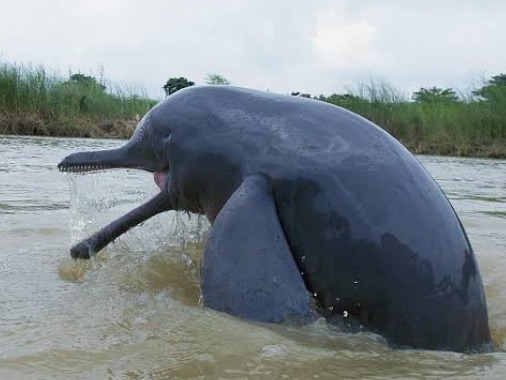
India’s Ganga River Dolphin Conservation Project has been recognized as one of 35 UN World Restoration Flagship projects in the United Nations Environment Programme (UNEP) report, “Nature’s Comeback: Scaling Ecosystem Restoration for People and Planet.” This recognition acknowledges efforts that integrate species conservation, the restoration of river ecosystems, and the enhancement of livelihoods for local communities. About the ‘Nature’s Comeback’ Report: This report is a joint effort by the UNEP, the Food and Agriculture Organization (FAO) of the United Nations, and the Secretariat of the Convention on Biological Diversity (CBD). It evaluates initiatives worldwide aimed at restoring degraded ecosystems. According to the report, it is necessary to increase the pace and scale of current efforts to achieve the global ecosystem restoration goals set for 2030. India’s Dolphin Conservation Action Plan (2022–2047): India has formulated a comprehensive action plan for the long-term conservation of river and marine dolphins, covering the period 2022–2047. Its key objectives include identifying critical dolphin habitats and hotspots, conducting scientific monitoring of populations, reducing accidental mortality in fishing nets, developing rescue and conservation facilities, and providing alternative livelihood opportunities for local communities. Introduction and Conservation Status of the Ganges River Dolphin: The scientific name of the Ganges River dolphin is *Platanista gangetica*. It is a freshwater dolphin, also known as 'Ganga Susu' or the 'blind river dolphin.' It is primarily found in the Ganga-Brahmaputra-Meghna river system. It is classified as 'Endangered' on the IUCN Red List. In 2009, the Government of India declared it the 'National Aquatic Animal.' Major Threats and Ecological Significance: The survival of the Ganges River dolphin is threatened by factors such as river pollution, dams and barrages, reduced water flow, habitat fragmentation, and entanglement in fishing nets. It uses echolocation—detecting objects and prey in its surroundings through sound waves—to navigate. It also serves as an important indicator of the health of the river ecosystem. UN Decade on Ecosystem Restoration (2021–2030): The United Nations General Assembly has declared 2021–2030 as the 'UN Decade on Ecosystem Restoration.' This initiative is being led by the UNEP and the FAO. Its objective is to halt the degradation of terrestrial, inland aquatic, coastal, and marine ecosystems and to promote their restoration. In this context, Target 2 of the Kunming-Montreal Global Biodiversity Framework (2022) is also significant; it sets a goal to ensure the effective restoration of at least 30% of degraded terrestrial, inland aquatic, marine, and coastal ecosystems by the year 2030.
Read More

- 02 November 2026
- Obituaries
Renowned British Actor Sir Patrick Stewart Passes Away at Age 86
Renowned British actor Sir Patrick Stewart passed away on October 28, 2026, at the age of 86. He was particularly well-known for his portrayal of Captain Jean-Luc Picard in the popular science fiction television series *Star Trek: The Next Generation* and Professor Charles Xavier in the *X-Men* film series. Early Life and Theatre Career: Patrick Stewart was born on July 13, 1940, in Mirfield, West Yorkshire, England. He received his acting training at the Bristol Old Vic Theatre School. In 1966,...
Renowned British actor Sir Patrick Stewart passed away on October 28, 2026, at the age of 86. He was particularly well-known for his portrayal of Captain Jean-Luc Picard in the popular science fiction television series *Star Trek: The Next Generation* and Professor Charles Xavier in the *X-Men* film series. Early Life and Theatre Career: Patrick Stewart was born on July 13, 1940, in Mirfield, West Yorkshire, England. He received his acting training at the Bristol Old Vic Theatre School. In 1966, he joined the Royal Shakespeare Company (RSC) and performed in many of Shakespeare’s most famous plays. His extensive experience in the theatre earned him international recognition.
Captain Jean-Luc Picard in Star Trek: Patrick Stewart gained global fame with the science fiction television series *Star Trek: The Next Generation*, which began in 1987. In it, he played the role of Captain Jean-Luc Picard, the commander of the USS Enterprise-D. The series aired for seven seasons, from 1987 to 1994. Additionally, he reprised this role in four *Star Trek* feature films. Professor Charles Xavier in X-Men: In the 2000 film *X-Men*, he portrayed Professor Charles Xavier (Professor X)—a character depicted as the founder and mentor of the mutant community. He reprised this role in several subsequent films, including *X2: X-Men United* (2003), *X-Men: The Last Stand* (2006), *X-Men: Days of Future Past* (2014), and *Logan* (2017). Major Awards and Honors: Patrick Stewart has received numerous prestigious honors for his contributions to acting and the theater. In 1996, he was awarded a star on the Hollywood Walk of Fame. In 2010, he was knighted by Queen Elizabeth II. Furthermore, he has won two Laurence Olivier Awards and a Grammy Award for a spoken-word recording. Contribution to the Global World of Arts and Entertainment: Patrick Stewart established a distinct identity across British theater, television, and Hollywood cinema. He performed in a wide range of genres—from plays based on classical literature to modern science fiction and superhero films. His work served as an important bridge between the British theatrical tradition and modern popular culture within the global entertainment industry.
Read More
Captain Jean-Luc Picard in Star Trek: Patrick Stewart gained global fame with the science fiction television series *Star Trek: The Next Generation*, which began in 1987. In it, he played the role of Captain Jean-Luc Picard, the commander of the USS Enterprise-D. The series aired for seven seasons, from 1987 to 1994. Additionally, he reprised this role in four *Star Trek* feature films. Professor Charles Xavier in X-Men: In the 2000 film *X-Men*, he portrayed Professor Charles Xavier (Professor X)—a character depicted as the founder and mentor of the mutant community. He reprised this role in several subsequent films, including *X2: X-Men United* (2003), *X-Men: The Last Stand* (2006), *X-Men: Days of Future Past* (2014), and *Logan* (2017). Major Awards and Honors: Patrick Stewart has received numerous prestigious honors for his contributions to acting and the theater. In 1996, he was awarded a star on the Hollywood Walk of Fame. In 2010, he was knighted by Queen Elizabeth II. Furthermore, he has won two Laurence Olivier Awards and a Grammy Award for a spoken-word recording. Contribution to the Global World of Arts and Entertainment: Patrick Stewart established a distinct identity across British theater, television, and Hollywood cinema. He performed in a wide range of genres—from plays based on classical literature to modern science fiction and superhero films. His work served as an important bridge between the British theatrical tradition and modern popular culture within the global entertainment industry.
- 02 November 2026
- Sci - tech
ISRO Successfully Launches NVS-03 Satellite via GSLV-F18; India’s Indigenous NavIC System to be Strengthened
The Indian Space Research Organisation (ISRO) launched the NVS-03 navigation satellite aboard a GSLV-F18 rocket on October 30, 2026, at 11:51 PM from the Satish Dhawan Space Centre (SDSC-SHAR) in Sriharikota. The objective of this mission is to strengthen the operational capability and reliability of India’s indigenous satellite-based navigation system, NavIC. Introduction to the NVS-03 Satellite: NVS-03 is the third satellite in India’s second-generation navigation satellite series (NVS Series)...
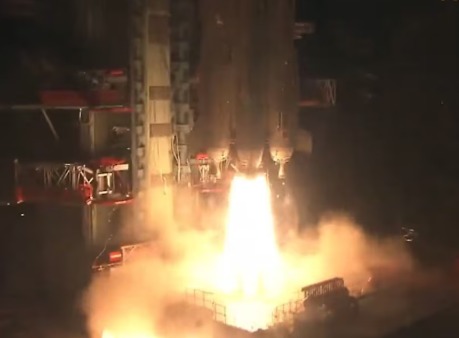
The Indian Space Research Organisation (ISRO) launched the NVS-03 navigation satellite aboard a GSLV-F18 rocket on October 30, 2026, at 11:51 PM from the Satish Dhawan Space Centre (SDSC-SHAR) in Sriharikota. The objective of this mission is to strengthen the operational capability and reliability of India’s indigenous satellite-based navigation system, NavIC. Introduction to the NVS-03 Satellite: NVS-03 is the third satellite in India’s second-generation navigation satellite series (NVS Series). It has been developed to improve Positioning, Navigation, and Timing (PNT) services within the NavIC system. Second-generation satellites incorporate additional features, such as the L1 frequency band, which enhances the compatibility of navigation services for civilian users. Characteristics of the GSLV-F18 Launch Vehicle: The GSLV (Geosynchronous Satellite Launch Vehicle) is India’s three-stage launch vehicle. It consists of a first stage using solid propellant, four liquid-propellant strap-on boosters, a second stage using liquid propellant, and a third stage powered by a cryogenic engine. The cryogenic stage utilizes liquid hydrogen (LH2) and liquid oxygen (LOX)—maintained at extremely low temperatures—as fuel and oxidizer, respectively. Introduction and Scope of NavIC: NavIC stands for "Navigation with Indian Constellation." Developed by ISRO, it was previously known as the Indian Regional Navigation Satellite System (IRNSS). It is India’s independent regional satellite navigation system, designed to provide navigation services across India and up to approximately 1,500 kilometers beyond its borders. It serves both civilian and strategic users. Key Applications of the NavIC System: NavIC provides services for both civilian and strategic purposes. Its primary applications include: Transportation: Navigation for road, rail, maritime, and air transport. Disaster Management: Support for emergency response, rescue, and relief operations. Fisheries: Providing location-based information and safety support to fishermen at sea. Strategic Sector: Independent navigation capabilities for defense and security operations. Telecommunications: Precision timing and network synchronization. Personal Navigation: Use in mobile devices, location-based services, and tracking.
Strategic Importance of NVS-03 for NavIC: The NavIC system previously faced challenges due to the end of the operational lifespan of certain satellites and technical issues related to their atomic clocks. NVS-03 is equipped with an indigenous rubidium atomic clock, alongside other atomic clocks. In addition to the existing L5 and S bands, it also incorporates the L1 signal. This will enhance compatibility with civilian navigation devices and strengthen the capacity to reduce India's reliance on foreign navigation systems.
Read More
Strategic Importance of NVS-03 for NavIC: The NavIC system previously faced challenges due to the end of the operational lifespan of certain satellites and technical issues related to their atomic clocks. NVS-03 is equipped with an indigenous rubidium atomic clock, alongside other atomic clocks. In addition to the existing L5 and S bands, it also incorporates the L1 signal. This will enhance compatibility with civilian navigation devices and strengthen the capacity to reduce India's reliance on foreign navigation systems.
- 02 November 2026
- Sci - tech
NASA Astronaut Anil Menon Completes Fourth Spacewalk; Marks 100th U.S. Spacewalk at the ISS
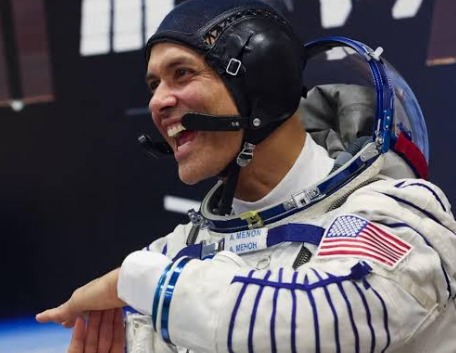
On October 29, 2026, NASA astronaut Anil Menon carried out his fourth spacewalk together with Canadian Space Agency (CSA) astronaut Joshua Kutryk. This was the 100th U.S. spacewalk at the International Space Station (ISS). The main goal of this mission was to install new Roll-Out Solar Arrays on the space station. Spacewalk and EVA: In scientific terms, a spacewalk is referred to as an Extravehicular Activity (EVA). An EVA occurs when an astronaut, wearing a specialized spacesuit, performs scien...
On October 29, 2026, NASA astronaut Anil Menon carried out his fourth spacewalk together with Canadian Space Agency (CSA) astronaut Joshua Kutryk. This was the 100th U.S. spacewalk at the International Space Station (ISS). The main goal of this mission was to install new Roll-Out Solar Arrays on the space station. Spacewalk and EVA: In scientific terms, a spacewalk is referred to as an Extravehicular Activity (EVA). An EVA occurs when an astronaut, wearing a specialized spacesuit, performs scientific, technical, or maintenance-related tasks outside of a spacecraft or space station. EVAs are utilized for repairing equipment, installing new hardware, and conducting maintenance on the space station.
Significance of Roll-Out Solar Arrays: A roll-out solar array is a type of solar energy system that converts sunlight into electrical energy using photovoltaic cells. It provides power to the International Space Station’s (ISS) life support systems, communication equipment, scientific experiments, and other electrical systems. Solar panels play a crucial role in meeting the energy requirements of the space station. Introduction and Academic Background of Anil Menon: Anil Menon is an American astronaut of Indian-Ukrainian descent. He was selected by NASA as an astronaut candidate in 2021. His academic qualifications include a bachelor’s degree in neurobiology from Harvard University, a master’s degree in mechanical engineering from Stanford University, and a medical degree from Stanford Medical School. He has also pursued advanced studies in aerospace medicine and public health. Comparison with Sunita Williams’ Spacewalk Record: NASA astronaut of Indian origin, Sunita Williams, has completed a total of 9 spacewalks during her space career, amounting to 62 hours and 6 minutes. Anil Menon’s fourth spacewalk marks another step toward such an achievement. The number of spacewalks and their total duration serve as key metrics for an astronaut’s operational experience in outer space. Anil Menon’s Military and Aviation Experience: Before becoming an astronaut, Anil Menon worked in the fields of emergency medicine, military medicine, and aviation. He served with the U.S. Air Force’s Critical Care Air Transport Team and was deployed during Operation Enduring Freedom in Afghanistan. He holds a flight instructor license and has over 1,000 hours of flight experience. This multifaceted background—encompassing medicine, engineering, military service, and aviation—is highly valuable for human spaceflight missions. Significance for Space Science: Increasing solar energy capacity on the ISS will support long-duration scientific experiments, life-support systems for astronauts, and future space missions. According to NASA, once all eight roll-out solar arrays are installed, the station's power generation capacity will increase from approximately 160 kilowatts to 215 kilowatts. This upgrade will also assist in the safe operation of the space station and its eventual controlled de-orbit.
Read More
Significance of Roll-Out Solar Arrays: A roll-out solar array is a type of solar energy system that converts sunlight into electrical energy using photovoltaic cells. It provides power to the International Space Station’s (ISS) life support systems, communication equipment, scientific experiments, and other electrical systems. Solar panels play a crucial role in meeting the energy requirements of the space station. Introduction and Academic Background of Anil Menon: Anil Menon is an American astronaut of Indian-Ukrainian descent. He was selected by NASA as an astronaut candidate in 2021. His academic qualifications include a bachelor’s degree in neurobiology from Harvard University, a master’s degree in mechanical engineering from Stanford University, and a medical degree from Stanford Medical School. He has also pursued advanced studies in aerospace medicine and public health. Comparison with Sunita Williams’ Spacewalk Record: NASA astronaut of Indian origin, Sunita Williams, has completed a total of 9 spacewalks during her space career, amounting to 62 hours and 6 minutes. Anil Menon’s fourth spacewalk marks another step toward such an achievement. The number of spacewalks and their total duration serve as key metrics for an astronaut’s operational experience in outer space. Anil Menon’s Military and Aviation Experience: Before becoming an astronaut, Anil Menon worked in the fields of emergency medicine, military medicine, and aviation. He served with the U.S. Air Force’s Critical Care Air Transport Team and was deployed during Operation Enduring Freedom in Afghanistan. He holds a flight instructor license and has over 1,000 hours of flight experience. This multifaceted background—encompassing medicine, engineering, military service, and aviation—is highly valuable for human spaceflight missions. Significance for Space Science: Increasing solar energy capacity on the ISS will support long-duration scientific experiments, life-support systems for astronauts, and future space missions. According to NASA, once all eight roll-out solar arrays are installed, the station's power generation capacity will increase from approximately 160 kilowatts to 215 kilowatts. This upgrade will also assist in the safe operation of the space station and its eventual controlled de-orbit.
- 02 November 2026
- Awards
Sunil Bharti Mittal Honored with France’s Highest Civilian Award, the ‘Legion of Honour’
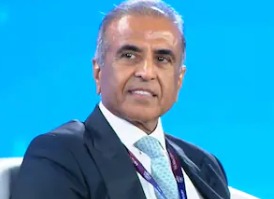
Sunil Bharti Mittal, Founder and Chairman of Bharti Enterprises, has been honored with France’s highest civilian award, the ‘Chevalier de la Légion d'Honneur’ (Knight of the Legion of Honour). The award was presented by Dr. Thierry Mathou, Ambassador of France to India. Purpose of the Honor: This honor has been conferred in recognition of Sunil Bharti Mittal’s contributions toward strengthening economic and strategic ties between India and France. Specifically, his role in advancing telecommunic...
Sunil Bharti Mittal, Founder and Chairman of Bharti Enterprises, has been honored with France’s highest civilian award, the ‘Chevalier de la Légion d'Honneur’ (Knight of the Legion of Honour). The award was presented by Dr. Thierry Mathou, Ambassador of France to India. Purpose of the Honor: This honor has been conferred in recognition of Sunil Bharti Mittal’s contributions toward strengthening economic and strategic ties between India and France. Specifically, his role in advancing telecommunications, digital and satellite communications, and promoting business cooperation between the two nations was highly commended. India-France Business Cooperation: Sunil Bharti Mittal has long-standing business ties with French companies. In 1992, a partnership was formed between the Bharti Group and the French company ‘Compagnie Générale des Eaux’ to launch mobile telephony services in India. Furthermore, his professional associations with companies such as AXA, Alcatel-Lucent, and Eutelsat have also been a key basis for this honor. Introduction to the Legion of Honour: The Legion of Honour (Légion d'Honneur) is France's highest national order. It was established on May 19, 1802, by Napoleon Bonaparte, the then-First Consul of France. This honor is conferred upon individuals who have made extraordinary contributions to France and humanity in both military and civilian spheres. It can be awarded to both French and foreign nationals. Structure and Administration of the Honour: The President of France serves as the Grand Master of this order. The Legion of Honour is awarded in five ranks—Chevalier, Officier, Commandeur, Grand Officier, and Grand-Croix. Sunil Bharti Mittal has been awarded the rank of Chevalier. Contribution of Sunil Bharti Mittal: Sunil Bharti Mittal is the founder of Bharti Enterprises, established in 1976. Its primary telecommunications business, Bharti Airtel, provides telecom services in India as well as in various countries across Asia and Africa. He also serves as the Vice Chairman of the satellite communications company Eutelsat. His leadership has contributed to the international expansion of India's telecommunications sector and the promotion of digital connectivity.
Read More
- 02 November 2026
- Appointments
Vijay Sankar, Chairman of the Sanmar Group, Named President-Elect of FICCI
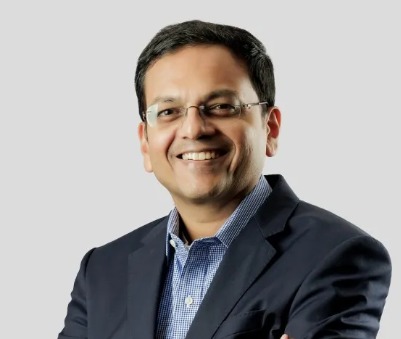
The Federation of Indian Chambers of Commerce and Industry (FICCI) elected Vijay Sankar, Chairman of the Sanmar Group, as its President-Elect for the year 2026-27 on October 29, 2026. This decision was made by FICCI’s National Executive Committee. Assuming Office: Vijay Sankar currently serves as the Senior Vice-President of FICCI. He will take over as the organization's President, succeeding Anant Goenka, following FICCI’s Annual General Meeting (AGM) and annual conference, which will be held o...
The Federation of Indian Chambers of Commerce and Industry (FICCI) elected Vijay Sankar, Chairman of the Sanmar Group, as its President-Elect for the year 2026-27 on October 29, 2026. This decision was made by FICCI’s National Executive Committee. Assuming Office: Vijay Sankar currently serves as the Senior Vice-President of FICCI. He will take over as the organization's President, succeeding Anant Goenka, following FICCI’s Annual General Meeting (AGM) and annual conference, which will be held on November 18–19, 2026. About Vijay Sankar: Vijay Sankar is the Chairman of the Chennai-based Sanmar Group—a prominent industrial conglomerate with operations in sectors such as chemicals and specialty chemicals, engineering, steel foundries, and shipping. Additionally, he serves as the Chairman of Chemplast Sanmar Limited. About FICCI and Its Establishment: The Federation of Indian Chambers of Commerce and Industry (FICCI) was established in 1927. This is a non-governmental, non-profit business organization in India, headquartered in New Delhi. Prominent figures from the Indian industrial sector, G.D. Birla and Purushottamdas Thakurdas, played a significant role in its establishment. Key Objectives and Functions: FICCI serves as a vital interface between Indian industry and the government. It promotes industrial development, trade, investment, entrepreneurship, policy reforms, and public-private collaboration. Its membership comprises companies from both the public and private sectors. Significance in the Indian Economy: Industry organizations like FICCI provide the government with the perspective of the business community during the formulation of industrial and economic policies. These organizations play a crucial role in offering policy recommendations on matters such as business challenges, investment barriers, job creation, export promotion, and the 'Ease of Doing Business.'
Read More

- 02 November 2026
- Sports
World Boxing U19 Championships 2026: India’s Aditya Wins Gold; Nation Secures a Total of 4 Medals
The World Boxing U19 Championships 2026 took place in Budva, Montenegro. This international competition featured male and female boxers under the age of 19, competing across various weight categories. India’s Performance: The Indian contingent secured a total of 4 medals: 1 gold, 1 silver, and 2 bronze. Aditya won gold, Megha Shyokand took silver, and Harshika and Prachi Tokas claimed bronze medals. Aditya’s Gold Medal: Aditya won the gold medal in the men’s 55kg weight category by defeating Rus...
The World Boxing U19 Championships 2026 took place in Budva, Montenegro. This international competition featured male and female boxers under the age of 19, competing across various weight categories. India’s Performance: The Indian contingent secured a total of 4 medals: 1 gold, 1 silver, and 2 bronze. Aditya won gold, Megha Shyokand took silver, and Harshika and Prachi Tokas claimed bronze medals. Aditya’s Gold Medal: Aditya won the gold medal in the men’s 55kg weight category by defeating Russia’s Islam Magomedov 4-1 in the final. Notably, he staged a brilliant comeback after trailing in the first round to clinch the title. Megha Shyokand’s Silver Medal: Megha Shyokand secured a silver medal in the women’s 80kg weight category. In the final, she faced a 0-5 defeat against Russia’s Ekaterina Frolova. Prior to this, she had secured her spot in the final by winning her quarter-final and semi-final bouts. Key facts about the competition: A total of 474 athletes participated in this championship, with 20 world champions crowned across various weight categories. In the medal tally, Russia finished first with 5 gold medals, Uzbekistan second with 4 gold medals, and the United States third with 2 gold medals. Significance of the competition: The World Boxing U19 Championships provide young boxers with an opportunity to showcase their talent on an international stage. The achievements of Indian athletes in this competition are significant for the development of young sporting talent in the country, for gaining international competitive experience, and for the future of boxing.
Read More